


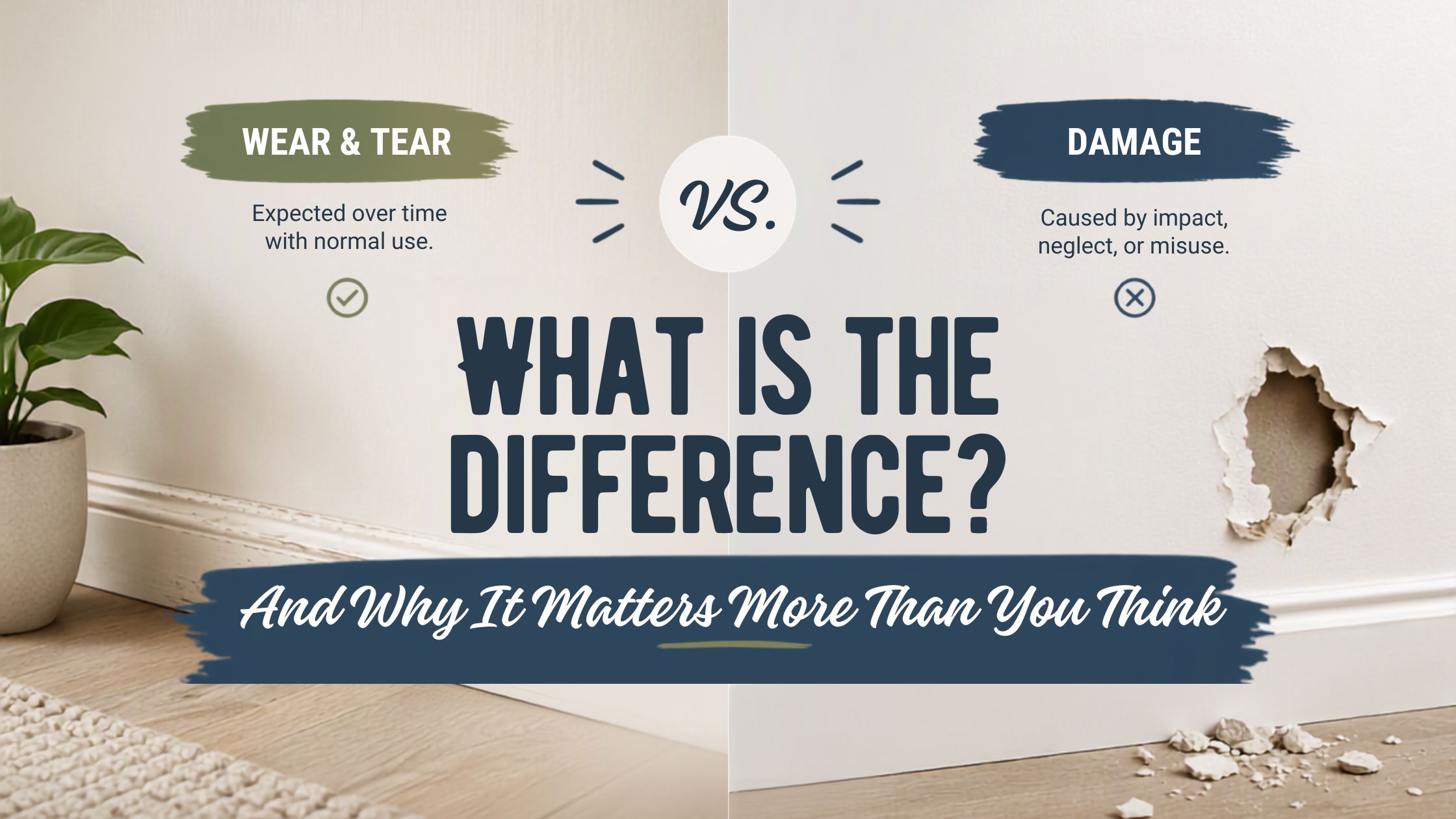
A scuffed wall. A worn carpet path. A small hole by the doorknob. Is that just life happening to a home or is it something a tenant should pay for?
This single question is behind more landlord-tenant disputes than almost anything else in the rental world. And the frustrating part is, most people on both sides are guessing. Tenants don't know what they're liable for. Landlords don't always know what they're legally allowed to charge for. That guessing game is exactly what this guide is here to end.
In plain terms, here’s the key distinction: Wear and tear is what happens to a home over time, no matter who lives there. Damage is what happens to a home because of how someone lived there.
That's the whole test. Everything else is just examples of that one idea playing out room by room.
Wear and tear = gradual, expected, unavoidable. No one is "at fault." It would have happened with any reasonably careful tenant.
Damage = avoidable. It happened because of negligence, carelessness, misuse, abuse, or an accident that careful living should have prevented.
This distinction comes from a standard the U.S. Department of Housing and Urban Development (HUD) helped formalize, and most state landlord-tenant laws build directly on it: deposits can only be used to cover damage that exceeds normal wear and tear but never the ordinary aging of a property.
Why This Distinction Exists in the First Place
Owning rental property is a business, and every business has operating costs. Paint fades. Carpet flattens. Hinges loosen. These aren't tenant failures, they're the predictable cost of renting out a home, the same way a car dealership expects mileage on a test-drive vehicle. The law puts that cost where it belongs: on the landlord, as part of doing business.
Damage is different. It's not a cost of renting, it's a cost of that specific tenancy, caused by something within the tenant's control. That's why the law allows it to come out of the deposit: it's restoring the landlord to the position they'd have been in if that tenant had been reasonably careful.
Room-by-Room: Telling Them Apart
Area | Normal Wear and Tear | Property Damage |
Walls | Faded paint, small nail holes, light scuffs | Large holes, unapproved paint colors, deep gouges |
Flooring/Carpet | Worn traffic paths, minor flattening | Pet urine stains, burns, large rips or tears |
Doors/Hardware | Loose handles, sticking hinges | Broken locks, holes punched through doors |
Windows | Minor scratches on glass, worn tracks | Cracked or broken panes, missing screens |
Appliances | Normal end-of-life wear | Broken from misuse or neglect |
Bathroom fixtures | Minor grout discoloration | Chipped enamel, broken tiles, mold from unreported leaks |
A useful gut-check question for any gray area: "Would this have happened even if the tenant had been careful and responsible?" If yes, it's wear and tear. If the honest answer is "only if something went wrong," it's damage.
The Detail Most People Miss: Depreciation
Even legitimate damage doesn't always mean a tenant pays full price for replacement. Most frameworks, again rooted in HUD guidance, expect landlords to account for an item's useful life. If carpet is expected to last five years and a tenant ruins it in year three, the landlord can typically only charge for the remaining value, not a brand-new replacement. A three-year-old carpet that's two-fifths through its lifespan doesn't get billed as if it were new.
This matters for both sides:
Tenants shouldn't be charged full replacement cost for something that was already most of the way through its useful life.
Landlords should build this into their math up front, so deductions hold up if challenged.
Why Tenants Should Care
Knowing this difference is financial self-defense. A landlord trying to deduct for faded paint or normal carpet wear isn't enforcing a gray-area rule, they're asking for money they're not legally entitled to. Most jurisdictions explicitly prohibit charging tenants for the ordinary cost of occupancy. Knowing where that line sits means you walk into your move-out with leverage, not just hope.
Why Landlords Should Care
This isn't just about fairness, it's about exposure. Mischaracterizing wear and tear as damage, or failing to itemize and document deductions properly, can backfire badly. Many states allow tenants to sue for the wrongfully withheld amount, and in cases of bad-faith withholding, landlords can be on the hook for double what they improperly kept, plus legal fees. Getting the distinction right isn't a courtesy to tenants, but it's a liability shield for you.
How to Protect Yourself, Whichever Side You're On
Document the move-in condition thoroughly. Photos and videos, room by room, dated and timestamped.
Use a move-in/move-out checklist. This creates a shared baseline neither side can dispute later.
Itemize every deduction with real costs, not estimates, receipts and invoices matter.
Factor in depreciation on any item with a known useful life.
When in doubt, ask the gut-check question: would this have happened to a careful tenant anyway?
For an official, plain-language explanation of these rules, the North Carolina Department of Justice's Landlord/Tenant guide is a reliable starting point, and the full statute is available directly from the North Carolina General Assembly, Chapter 42, Article 6.
The Bottom Line
In North Carolina, the difference between wear and tear and damage isn't about how something looks at move-out, but it's about why it happened and what the statute says about who pays. One is the unavoidable cost of time. The other is the avoidable cost of carelessness, and the law is specific about both.
Not sure where your situation falls on the line?
Take action now: document the condition, review your move-in checklist, and compare it against the standards above. If there’s still uncertainty, speak with a local property management professional or tenant rights resource before money changes hands. A few minutes of clarity today can prevent weeks of frustration later.